
The challenge
Kerbside dumping is an ongoing problem faced by local council waste management teams. The clean-up of dumbing can cost councils up to $750,000 annually, while also causing damage to infrastructure and environmental restoration.
The local council was frequently impacted by dumped rubbish which resulted in:
- Regularly scheduled waste management trucks being unable to collect the rubbish piles and mattresses
- Manual collection dispatch services were responsive rather than route and load optimised
- A reliance on rangers and citizens to report the rubbish piles and mattress which could take weeks
The solution
Blackbook AI built an annotated dataset using historical data from smart-enabled trucks and in-cabin triggers.
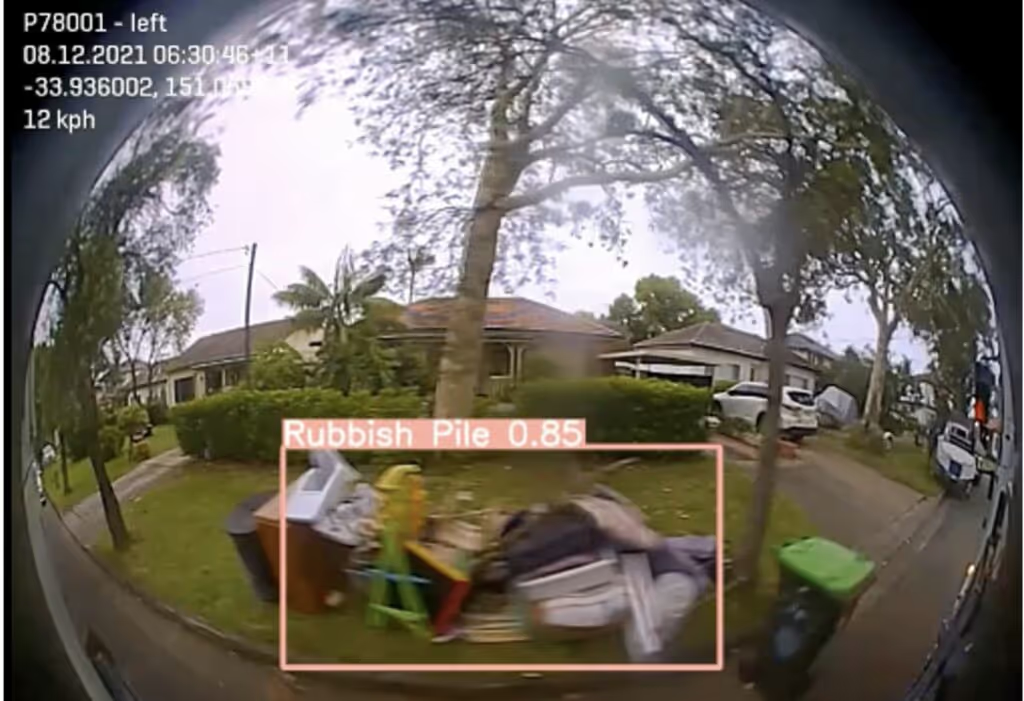
Using GPS and GNSS-linked camera footage from garbage trucks, the model uses computer vision to triangulate the location of detected rubbish piles and mattresses. Through an API, this data returns street addresses to the council for locations requiring kerbside pick-up.
The outcomes
The local council was able to unlock the value of their raw camera data to drive decision making.
Outcomes included:
- Significant cost savings through route and load optimization of dispatch service
- Reduced response time to pick-up
- Targeted campaigns and response monitoring
- Improved coverage with garbage truck schedule and reduce reliance on rangers and citizens